Through nearly the entirety of the twentieth century, whiskey markets were dominated by relatively few large businesses, often owned as subsidiaries of global beverage holding companies—the conglomerates. This began to change in the first decades of the twenty-first century, when reforms in state laws, federal regulations, and tax policy made it easier for smaller businesses to produce distilled spirits. The craft boom put new names and new places on the liquor store shelf.
But look at the bottles collectors call unicorns. The familiar names still come overwhelmingly from the very same big business that I describe in the opening paragraph. The law made it easier to enter the market. It did not make it equally easy to persuade buyers that a new producer’s best whiskey belongs above the established brands. This presents a puzzle.
Beer followed a similar hegemony and trajectory in its craft boom, though it got an earlier start. Wine was a different beast altogether, and perhaps led the way. It may have been easier with wine because it was always more localized: wine is a product of grapes, with style heavily dependent on variety and growing conditions. French producers also sought legal protection for wines identified with particular places, an effort that developed into the appellation system. As winemaking expanded into new regions and markets—New Zealand, South Africa, Argentina, and California, for instance—new producers had to overcome Old World dominance. They did this in part by turning terroir on its head. If a wine’s distinctive qualities were a product of its locality, new regions could claim expressions unique to their localities.
And after that long, roundabout introduction, you’re probably wondering what all this has to do with unicorns. I know I would be. We’ll boomerang back to wine.
I recently found myself looking for examples of craft whiskey “cult labels”—the collector’s so-called unicorns—and came to the realization that there are remarkably few clear examples produced by the new generation of independent distilleries. By a cult label, I mean a release that is highly sought after, sells out quickly on the primary market, and attracts enough demand elsewhere that people repeatedly pay substantially more than its initial release price. Scarcity plus perceived prestige drive these labels. A high asking price will not establish the point; I want to know what bottles actually sell for after the initial release.
I admit this is a contestable statement. I know a small distillery whose two- or three-barrel releases sell out in three to four weeks. This shows that production meets a local demand, and it is easy to imagine a few local fans paying extra to acquire a missed release. That is commendable and a worthy example of a small craft distillery succeeding and building a local reputation.
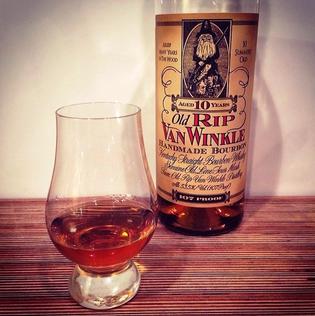
But I am talking about something more akin to fame: a regional, national, or even international reputation that inspires transactions far away from the distillery. The industry name you often hear in the liquor store is allocated release, though allocation alone does not make a bottle a cult label. A bottle of Booker’s may be eagerly sought during its release window and still sit far below a bottle of Pappy Van Winkle in the collector’s hierarchy. The releases collectors most readily call unicorns are disproportionately legacy brands.
Again, I have made a contestable claim. There are contenders among newer and independent producers, and each complicates it in a useful way.
The best example that comes to mind is Stranahan’s Snowflake. Its coveted December release draws devotees to the Denver distillery, where it is sold exclusively. Bottles have traditionally sold out in a day. Snowflake started with a local distillery, but Stranahan’s was acquired in 2010 by Becle, the company behind Proximo Spirits. It shows that a whiskey can remain locally made, inspire a genuine release ritual, and develop a reputation well beyond its home market while belonging to a major beverage portfolio. It also corrects my initial definition: the bottle does not need national distribution if its reputation can travel without it.
Willett also deserves mention because, though it is established, it remains family owned. Its older Family Estate single barrels are highly coveted and command substantial premiums. Yet Willett is not a brand I associate with the craft revolution. Its history stretches back to 1936, although distilling stopped for decades and resumed in 2012. Some of the bottles that built its cult reputation came from barrels acquired and bottled during the intervening years. Willett demonstrates that an independent company can build extraordinary collector prestige. Its history makes it a complicated example of a new distillery doing so with its own whiskey.
Rare Character complicates the word craft. Some of its releases have attracted substantial secondary-market premiums. If I use craft to include independent selection, blending, and bottling, I cannot simply claim that craft whiskey has produced no unicorns. Rare Character says it sources whiskey from distilleries in several states. Its success suggests that collectors may place extraordinary value on the judgment of the person who finds and bottles a barrel, even when that person did not distill it. That is a form of skill. It is a different case from a new distillery building a national cult around whiskey it made itself.
Garrison Brothers’ Cowboy Bourbon is the closest contender among the newer distilleries I have in mind. Founded by Dan and Nancy Garrison in Hye, Texas, the distillery makes its bourbon there from Texas-grown grain. Cowboy follows the annual allocated model used by major companies for their most coveted labels. The 2026 release comprises 16,000 bottles. The first 1,000 were offered at the distillery on September 12; selected bars, restaurants, and retailers nationally are scheduled to receive it beginning October 1 at a suggested price of $249.99. It has the production story, the awards, the release ritual, and the reach.
Why, then, do I call it a cult label in the making rather than a settled fact? Because a crowd at the distillery and a national allocation establish demand at release. My question concerns what happens across markets and across years. Do bottles repeatedly sell at substantial premiums once the initial stock is gone? Cowboy may pass that test. Its 2026 national retail release has not begun as I write this, so it would be premature to answer the question from this year’s availability.
These cases narrow what I am asking: Why have so few newly founded, independently controlled distilleries making their own whiskey produced a durable national unicorn?
This gets to what we call “craft.” I view it in two dimensions: first, locally made through small-scale production, often from local ingredients; second, independently owned, or at least not controlled by the large conglomerates that dominate the market. The first dimension is something a visitor can often see. The second is harder to establish. A privately held company’s public records may identify its managers or members without revealing every ownership percentage or right to control a decision. Kentucky’s Secretary of State says its records do not establish a company’s full ownership.
Willett describes itself as family owned and operated, and I have found no evidence that a conglomerate controls it. Still, its nearly $93 million distillery expansion makes me wonder how readily an outsider could verify the independence of any private distillery. A large investment does not imply a silent partner; borrowing money is different from selling control. My point is narrower. “Craft” is also a look. A small operation, local ingredients, labor-intensive production, and people with true artisan passion are visible to the consumer. Ownership generally is not. Large businesses understand this and can keep acquired distilleries connected to local culture while using their wider resources to promote them.
One hypothesis is that craft whiskey has not had enough time to grow the prestige necessary to compete for the most coveted market status. Wine had an earlier start. American wine first had to break Old World hegemony, and California became its first great region, particularly the Napa Valley. Screaming Eagle Cabernet and Harlan Estate are examples of cult labels. Sine Qua Non shows that California’s reputation for exceptional wine extends beyond Napa, while Bionic Frog in the Walla Walla Valley shows that collector interest extends beyond California.
This does not negate the time-to-mature hypothesis. California had more time to develop a reputation. Nonetheless, I have moved away from time as a sufficient explanation. California’s producers did more than wait for their vines and reputations to mature. They made wine that buyers came to rank among the world’s best, then won a larger argument about whether an American region could occupy that position at all. The wine comparison is worthwhile, but it is not perfect.
So here it is: a craft distillery in Texas or New York State might make an excellent bourbon from local ingredients. It might win a top award at a prestigious spirits competition. It can promote that it is craft, and everything about its production may support the claim. It is a small operation, using human hands and people with genuine artisan passion. Yet winning a competition does not necessarily change the standing of the brand whose bottle sits beside it. The large businesses own much of the legacy narrative, and their marketing and distribution resources can repeat that narrative more widely than most small and medium-sized distilleries can.
That does not mean the legacy whiskey is inferior or that collectors have been fooled. It means a blind tasting, a competition award, and a collector’s decision to pay several times retail answer different questions. One judges the liquid under particular conditions. Another judges a bottle with a name, a history, an allocation, and the judgments of other buyers attached to it. The craft narrative is now in vogue, but being craft may not be enough to displace an established claim to superiority.
There is a business complication as well. A distillery that prices a limited release close to what its customers will pay may leave little room for a secondary-market premium. That could be an excellent outcome for the distillery. I use resale here as evidence of collector status, not as the definition of business success.
My proposition, then, is that the craft boom has changed the terms of production faster than it has changed the terms of prestige. A new distillery can make whiskey that wins on quality and still lose the argument over which bottles belong at the top. California’s best wineries won that argument in wine. I am still looking for the independent craft distillery that wins it in whiskey in terms of the cult label.